
2026-08-30 · Brian Jay
How To Spot Duct Leaks That Raise Cooling Bills In San Marcos
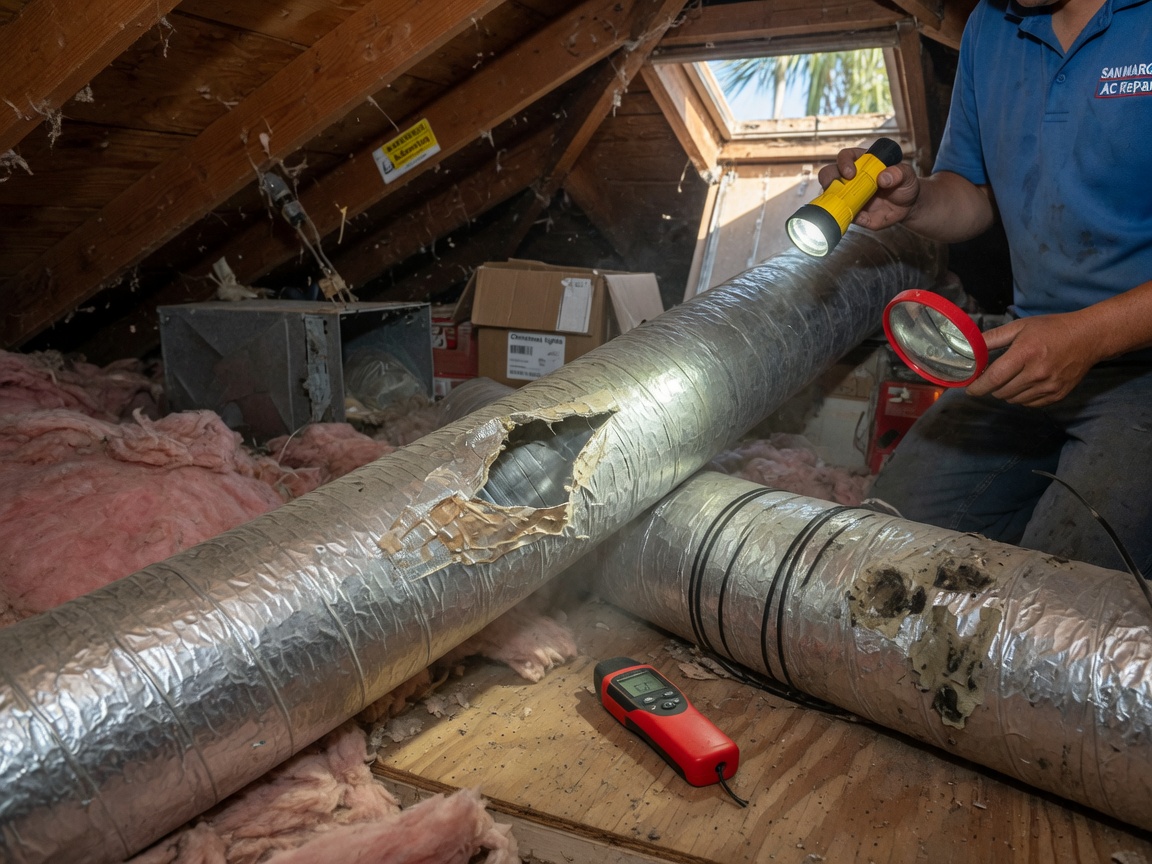
Duct leaks in San Marcos typically raise cooling bills by 20-30 percent because the warm Mediterranean climate with dry summers keeps systems running longer to maintain comfort. Homeowners notice uneven temperatures across rooms, especially in single-story ranch homes built in the 1970s and 1980s that dominate neighborhoods like Richland and Twin Oaks. Dust streaks near vents, hissing sounds when the AC runs, and higher humidity indoors also point to leaks allowing conditioned air to escape into attics or crawl spaces.
Common Signs of Duct Leaks in San Marcos Homes
Homeowners in San Marcos Village and Richland often first notice rooms that stay warmer than others even when the thermostat is set low. Check supply vents for weak airflow or visible dust lines along seams where ducts connect to registers. Listen for whistling or rattling near the air handler during operation, which signals air escaping through gaps in flexible ductwork common in homes near Discovery Lake. Rising energy use on monthly bills without a change in usage patterns further confirms leaks, as the system compensates by running longer cycles in dry summer conditions. Inspect accessible duct runs in attics for separated joints or crushed sections that allow cooled air to vent outside the living space.
How Local Climate and Housing Stock Affect Leaks
San Marcos experiences prolonged dry summers that increase AC runtime and highlight duct weaknesses faster than in coastal spots like Carlsbad. Older duct systems in Twin Oaks homes built before 1990 use mastic that cracks over time due to temperature swings and occasional Santa Ana winds. Soil conditions near San Marcos Lake can lead to minor foundation shifts that stress duct connections in crawl spaces. These factors make leaks more likely at joints and turns where flexible ducts meet rigid metal runs. Regular exposure to the region's low humidity also dries out insulation wrapping, reducing its ability to contain air and raising overall cooling loads.
Step-by-Step Checks for Homeowners
Begin by turning off the system and examining visible ducts in the attic for gaps larger than a quarter inch. Use a smoke pencil or incense stick near seams while the blower runs to watch for air movement indicating leaks. Measure temperature at vents farthest from the air handler and compare readings to those nearby; differences over 3 degrees often trace to leaks. Focus on areas around CSU San Marcos where many homes share similar construction with long duct runs through unconditioned spaces. Document findings with photos before deciding on repairs.
When Professional Inspection Makes Sense
If basic checks reveal multiple leak points or bills remain high after filter changes, schedule service through AC Maintenance to seal ducts properly. Technicians familiar with San Diego County homes can pressure-test the full system and locate hidden leaks in walls or under floors common in Richland Villas. For urgent cases during peak summer, Emergency AC Repair addresses comfort issues quickly. Review the guide on How To Change Your Ac Filter Correctly In San Marcos Homes first to rule out simpler causes before assuming major duct work. Homes near Vista or Escondido with similar stock often need the same targeted sealing approach.
Preventing Future Issues in San Marcos
Seal accessible joints with mastic or metal tape rated for HVAC use rather than standard duct tape that fails in dry conditions. Schedule annual inspections before summer to catch wear from occasional Santa Ana winds, as covered in How Santa Ana Winds Affect Ac Performance In San Marcos. Keep attic insulation intact around ducts to reduce condensation risks during cooler evenings. These steps help maintain efficiency in the local climate without unnecessary replacements.