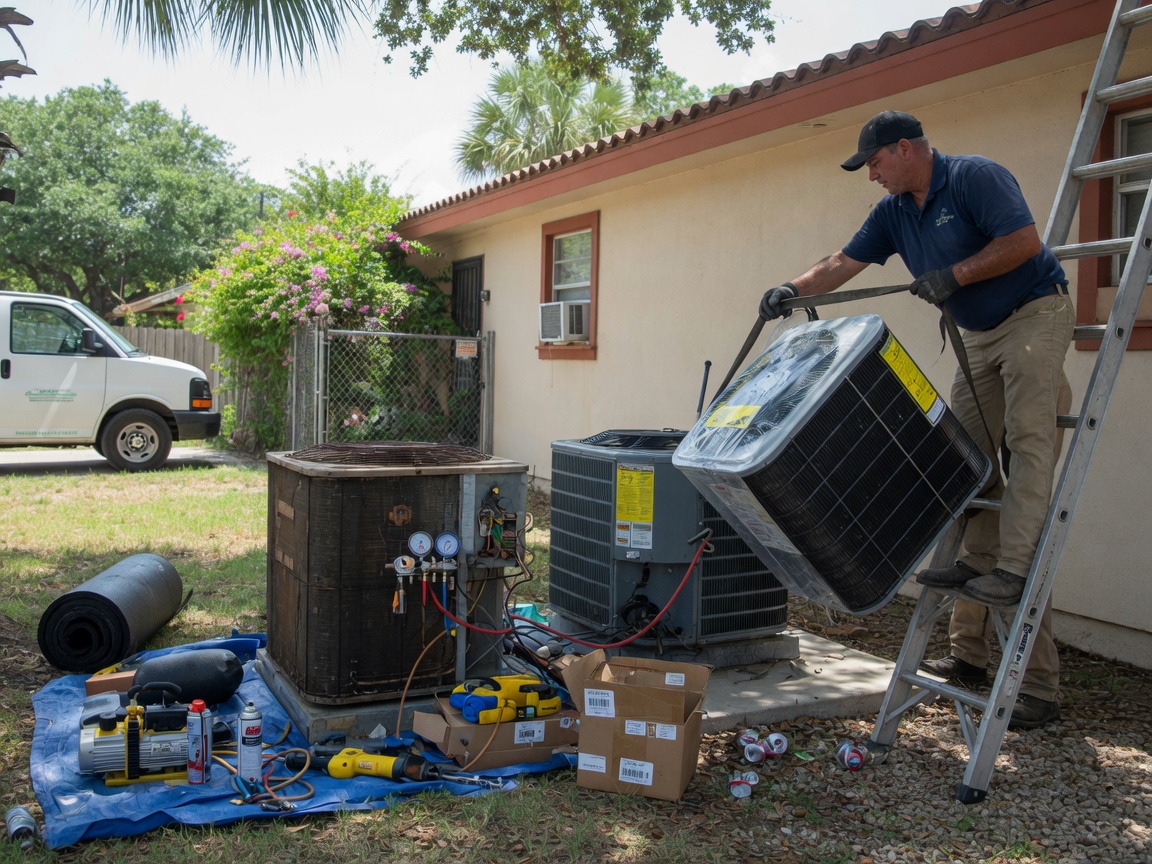
San Marcos homes in neighborhoods like Twin Oaks and Richland often feature single-story tract housing from the 1970s through 1990s with original ductwork that has degraded over decades of dry summer use. Warm Mediterranean conditions push these units hard from May through October, leading to compressor failures and uneven cooling across rooms. Replacement work here frequently involves matching new equipment to existing duct layouts while accounting for the limited attic space common in these builds.
Near San Marcos Lake and Discovery Lake, higher humidity pockets can accelerate coil corrosion on older systems, especially when homes sit on sloped lots that trap moisture. Technicians replacing units in these areas routinely check for proper condensate drainage and verify that new high-efficiency models meet San Diego County permitting requirements for refrigerant lines and electrical upgrades. Skipping these steps leads to callbacks during peak heat.
Homeowners in San Marcos Village often request replacements when their current units can no longer maintain indoor comfort once temperatures climb above 85 degrees. Proper sizing prevents short cycling on the smaller lots typical here, where afternoon shade from nearby hills can vary significantly between properties. Upgrading also improves airflow in homes that have added square footage over the years without updating the HVAC.
Technician insight
In San Marcos the thing that catches most people out with AC Replacement is discovering that 1980s homes in Twin Oaks have undersized return ducts that choke new high-efficiency units. The dry summers here mask the problem until the first real heat wave hits and the system short cycles. Checking static pressure before quoting saves everyone a second visit.
Twin Oaks Home System Swap
A 1987 single-story house near Twin Oaks had an original unit that failed during a late-summer stretch. Inspection showed corroded coils and collapsed flex duct in the attic. The crew removed the old equipment, installed a properly sized 16-SEER system, and sealed the return path. The home now holds steady temperatures through the afternoon heat without short cycling.
AC Replacement Services We Offer
✓Central AC System Replacement
Full removal of old central units and installation of new systems sized for San Marcos homes with existing ductwork.
✓Ductless Mini-Split Installation
Zone-specific cooling solutions ideal for additions or homes in Richland where extending ducts is impractical.
✓High-Efficiency Unit Upgrades
Swapping older units for high-SEER models that handle San Diego County’s extended dry summers with lower energy use.
✓Whole-Home AC Replacement
Complete system swaps including new air handlers for larger properties near CSU San Marcos.
✓Emergency AC Replacement
Same-day unit changeouts for homes in Twin Oaks and Vista that lose cooling during heat waves.
AC Replacement Cost in San Marcos, CA
| Service | Typical Range | What Affects It |
|---|---|---|
| Standard Central Replacement | $4,800–$7,200 | Most common for 1,800–2,400 sq ft homes in San Marcos Village |
| Ductless Mini-Split Install | $3,200–$5,500 | Varies by number of zones needed in additions |
| High-Efficiency Upgrade | $6,500–$9,800 | Includes SEER 16+ models for dry summer efficiency |
| Electrical Panel Upgrade | $1,200–$2,400 | Required on some older Richland properties |
Ranges are typical for San Marcos, CA and confirmed with an exact written quote before any work starts.
How it works
- 1
Site Assessment
Technician inspects existing equipment, duct condition, and electrical service at the San Marcos address to determine proper sizing.
- 2
Old Unit Removal
Safe disconnection and haul-away of the failing system while protecting surrounding landscaping common in local neighborhoods.
- 3
New Equipment Installation
Placement of the replacement unit, reconnection of lines, and integration with existing ductwork or new linesets.
- 4
Testing and Commissioning
Full system startup, airflow verification, and thermostat programming to confirm performance in dry summer conditions.
Pricing
Costs depend on unit capacity, existing duct condition, and whether electrical upgrades are required.