
2026-09-15 · Brian Jay
How to Tell if Your AC Has a Refrigerant Leak
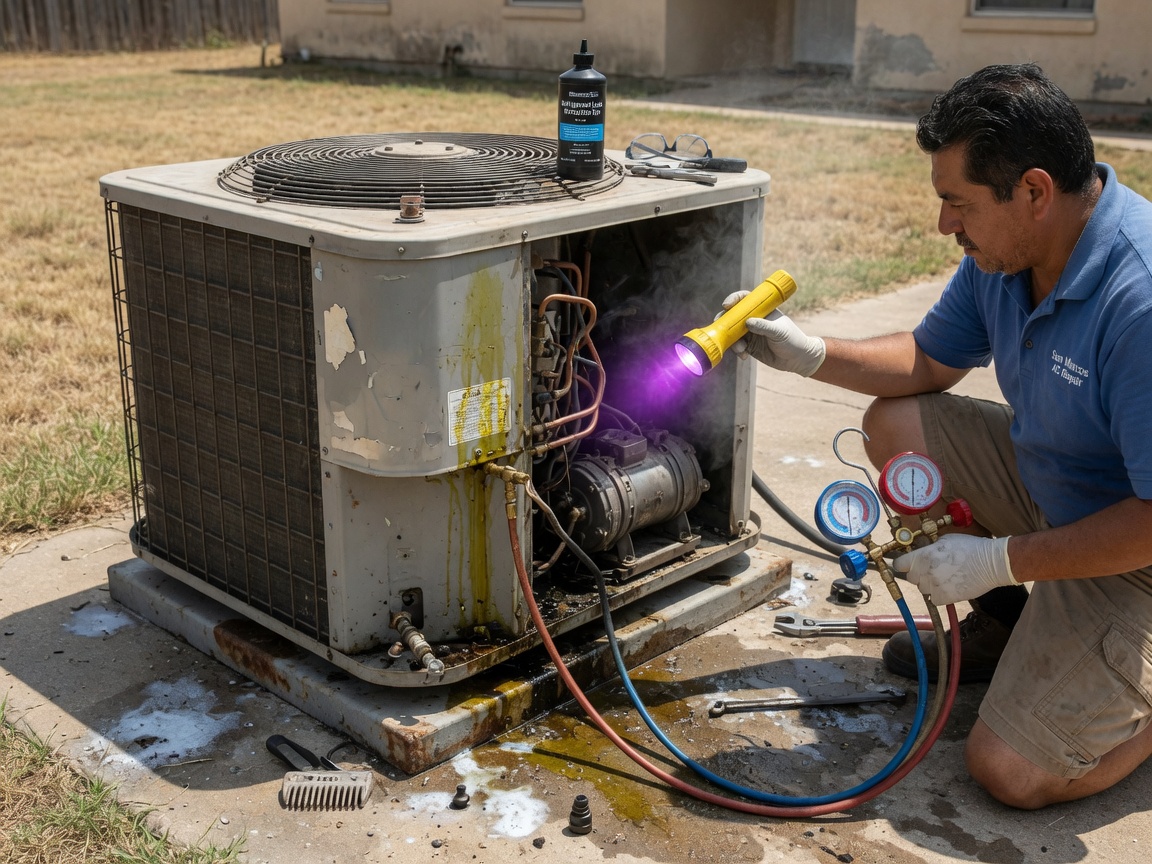
You can spot an AC refrigerant leak in San Marcos by checking for ice forming on the evaporator coils even when temperatures stay above 80 degrees, hearing a persistent hissing or bubbling sound near the outdoor unit, or seeing your monthly electric bill climb 20-30 percent without added usage. These signs show up quicker here because the warm Mediterranean climate with dry summers forces units in neighborhoods like Twin Oaks and Richland to run longer cycles. Homes near Discovery Lake or San Marcos Village often have older ductwork that hides early leaks until cooling fails outright.
Visual and Audible Indicators in Local Homes
Walk around your outdoor condenser on a typical summer afternoon and look for oil stains or frost lines along the copper lineset. In Richland and San Marcos Village, many single-story homes built in the 1980s and 1990s use R-22 systems that develop pinhole leaks at the service valves after 12-15 years. Listen for a steady hiss when the unit cycles on; that sound travels farther in the quiet evenings common near CSU San Marcos. If the indoor blower runs but air from the vents feels only slightly cool, the charge has likely dropped below the 10-15 percent threshold that keeps coils at proper temperature. Check the condensate drain pan for unusual amounts of water, another sign the evaporator is running too cold and freezing moisture from the air.
Impact of San Diego County Summers on Leak Detection
San Marcos dry summers push systems in Twin Oaks and near San Marcos Lake to operate 10-12 hours daily, which accelerates wear on Schrader valves and flare fittings. When daytime highs reach the mid-80s and humidity stays low, a small leak becomes noticeable within days because the unit cannot maintain the 55-60 degree supply air temperature needed for comfort. Residents in Richland often notice short cycling first, where the compressor shuts off after only a few minutes. This pattern appears because low refrigerant trips the low-pressure switch faster than in coastal areas like Carlsbad or Vista. Track your thermostat runtime over a week; if it exceeds 70 percent duty cycle on days under 85 degrees, schedule testing before the system loses the remaining charge.
When to Schedule Professional Testing
Homeowners should not attempt to add refrigerant themselves, as federal rules require EPA Section 608 certification and proper recovery equipment. A technician uses manifold gauges and an electronic leak detector to confirm pressures and locate the source, often at the evaporator coil or line set joints common in San Elijo Hills and Village O homes. If the leak is found early, repairs typically involve brazing or component replacement rather than full system replacement. Compare symptoms against our guide on What AC Repair Usually Costs In San Marcos Right Now to understand typical ranges for leak diagnosis and fix. Persistent weak cooling also points to related issues covered in How Much Does an AC Compressor Replacement Cost?.
Next Steps After Confirming a Leak
Once gauges show low suction pressure and the leak is isolated, the proper fix is AC Refrigerant Leak Repair that includes pressure testing and recharging to factory specifications. In San Marcos homes, technicians also inspect the filter drier and expansion device because debris from a leak can clog these parts and shorten compressor life. After repair, schedule follow-up checks every 30 days for the first season to verify the system holds charge. This approach keeps cooling reliable through the long dry periods that define summers across San Diego County and nearby cities such as Escondido and Vista.