
2026-09-15 · Brian Jay
What Does an AC Compressor Do?
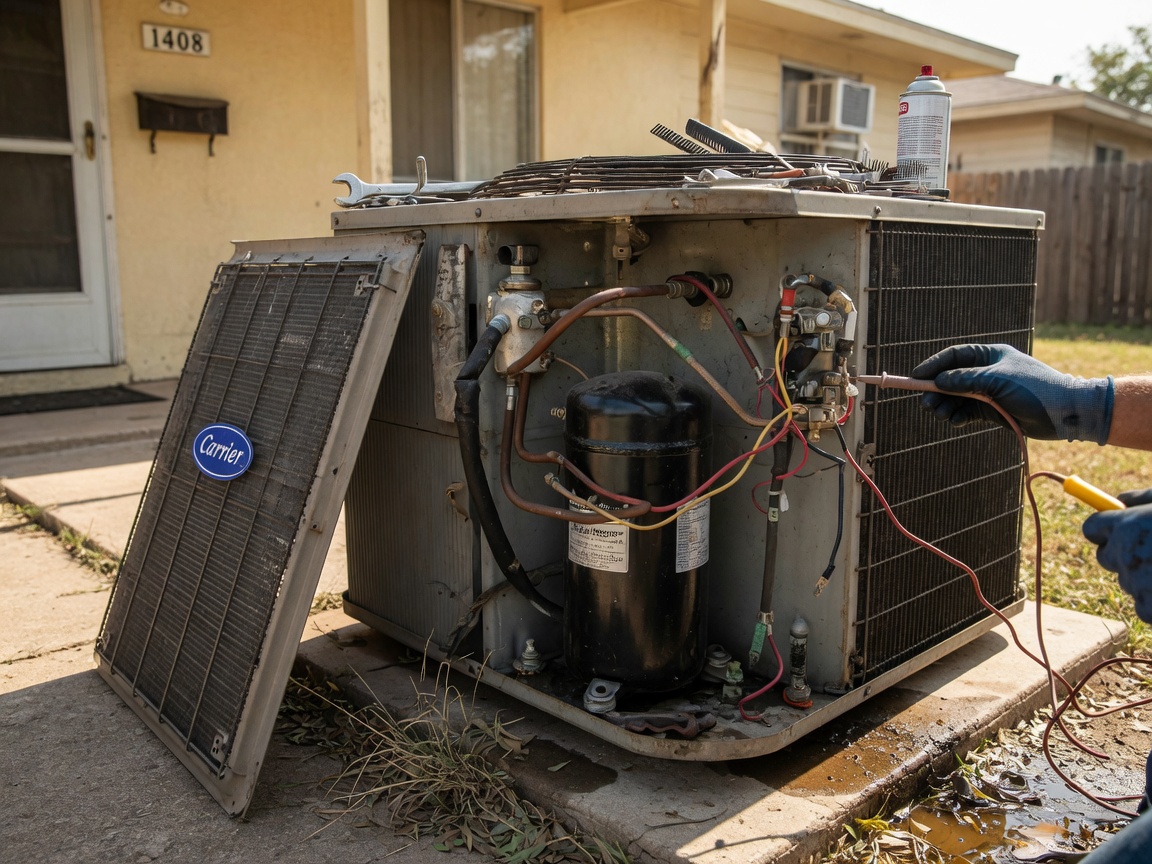
The AC compressor functions as the pump that compresses low-pressure refrigerant gas into high-pressure gas, driving the entire cooling cycle by pushing refrigerant between the indoor evaporator and outdoor condenser coils. This process absorbs heat from inside air and releases it outdoors, maintaining comfortable temperatures in San Marcos homes during extended warm periods. The component cycles on and off based on thermostat demand, with typical residential units handling 3 to 5 tons of cooling capacity suited to single-family houses common in areas such as San Marcos Village.
How the Compressor Fits Into the Cooling Cycle
Refrigerant enters the compressor as a low-pressure vapor after picking up heat indoors, where the unit squeezes the gas to raise its temperature and pressure before sending it to the condenser coil. There, the hot gas releases heat to outside air and condenses into liquid, which then travels through an expansion valve to drop pressure and temperature for the evaporator stage. In San Diego County homes with older ductwork from the 1980s and 1990s, this cycle repeats frequently because dry summer air holds less moisture and requires steady heat removal. The compressor motor draws the most electricity of any AC part, often accounting for the bulk of summer utility costs when temperatures stay above 80 degrees for weeks. Proper refrigerant charge keeps pressures balanced so the compressor avoids strain that shortens its typical 10- to 15-year lifespan in local conditions.
Climate Effects on Compressors in San Marcos
San Marcos experiences a warm Mediterranean climate with dry summers that force compressors to run longer cycles without the relief of frequent rain or humidity. Homes near San Marcos Lake or Discovery Lake see slightly moderated temperatures from water bodies, yet units still operate 8 to 12 hours daily in peak months. Terrain in Twin Oaks and Richland adds dust and pollen that coat outdoor coils, reducing efficiency and making the compressor work harder to maintain setpoints. Nearby cities like Escondido, Vista, and Carlsbad share similar patterns, where afternoon heat builds quickly on south-facing slopes. These conditions increase wear on piston or scroll compressors found in most local split systems, especially when filters go unchanged for more than 60 days.
Common Compressor Issues and Diagnosis
Low refrigerant from leaks at Schrader valves or coil connections causes the compressor to overheat and trip safety switches, a frequent call in Richland Villas properties. Electrical problems such as failing start capacitors or contactors prevent the unit from engaging, leaving indoor temperatures rising fast on 90-degree afternoons. Noises like rattling or humming often signal worn bearings or loose mounts after 8 to 12 years of service. Technicians check superheat and subcooling readings at the service ports to confirm whether the compressor itself has failed or if another issue like a clogged filter drier is at fault. AC Repair Services address these diagnostics directly, while AC Maintenance visits help catch pressure imbalances before they lead to replacement.
When Replacement Becomes Necessary
Replacement enters consideration once a compressor shows internal damage through failed megger tests or when repair costs exceed 50 percent of a new unit price. In San Marcos homes, technicians often recommend full system evaluation because mismatched components reduce efficiency and void warranties. Homeowners in areas like San Elijo Hills benefit from checking related articles such as Why San Marcos Homes See More Ac Short Cycling In Late Summer and Signs Your Ac Needs Immediate Attention Before Fall In San Marcos to recognize early warnings. Professional assessment at the address on Bosstick Blvd confirms whether the compressor can be rebuilt or requires full AC Replacement to restore reliable cooling before the next dry season.